The influence of the rich tradition of terracotta art displayed in the museums of Rajasthan on contemporary art
- Authors
-
-
Laxman Lal Sargada
Shri Govind Guru Government College, Banswara (Raj.)Author
-
- Keywords:
- Cultural Heritage, Terracotta Art, Contemporary Art, Museum, Sculpture, Folk Culture, Environmental Conservation
- Abstract
-
Rajasthan’s terracotta art tradition is an important part of Indian cultural heritage, serving as a medium of utility, beauty, and expression of folk life. Earthen pots, sculptures, and clay toys discovered from archaeological sites such as Kalibangan and Ahar reflect the antiquity and advanced nature of this art form. Museums of Rajasthan, such as Government Museum Bikaner, Albert Hall Museum, and Kalibangan Museum preserve these artworks and inspire artists and researchers. Contemporary artists are drawing inspiration from traditional terracotta art and experimenting with modern sculpture, painting, design, and decorative arts. Its influence can also be seen in fashion, graphic, and interior design. Since terracotta is eco-friendly and biodegradable, it has become even more relevant in the modern era. Internationally, Rajasthan’s terracotta art represents Indian folk culture on a global platform. Although challenges such as industrialization, machine-made products, and the declining number of artisans exist, proper preservation and encouragement can strengthen and sustain this rich artistic tradition in the future.
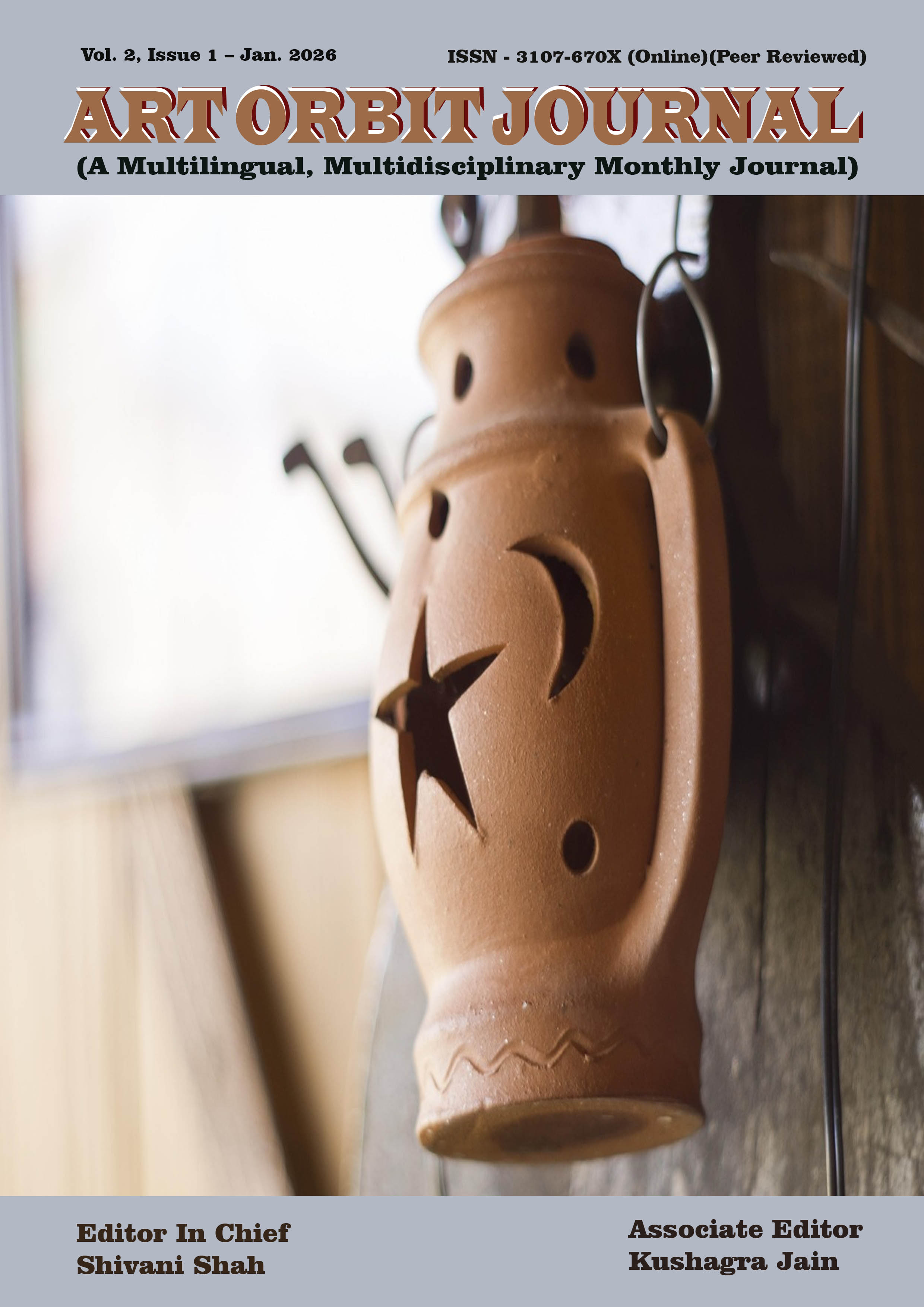
- Cover Image
-
- Published
- 2026-01-31
- Section
- Articles
- License
-
Copyright (c) 2026 ART ORBIT

This work is licensed under a Creative Commons Attribution-NonCommercial-NoDerivatives 4.0 International License.

How to Cite
Most read articles by the same author(s)
- Laxman Lal Sargada, Paintings of Juna Mahal, Dungarpur: A unique confluence of adornment, beauty and philosophy , ART ORBIT: Vol. 2 No. 1 (2026): ART ORBIT ISSN 3107-670X